



Lagmansgården Reform School
Lagmansgården Reform School, located in the natural landscape of Finland’s west coast, offers a safe, home-like rehabilitative environment for youth in need of intensive foster care and special needs education. Commissioned by state-owned Senate Properties and selected through an architectural competition in 2020, the facility combines living, learning, and support spaces into a unified whole.
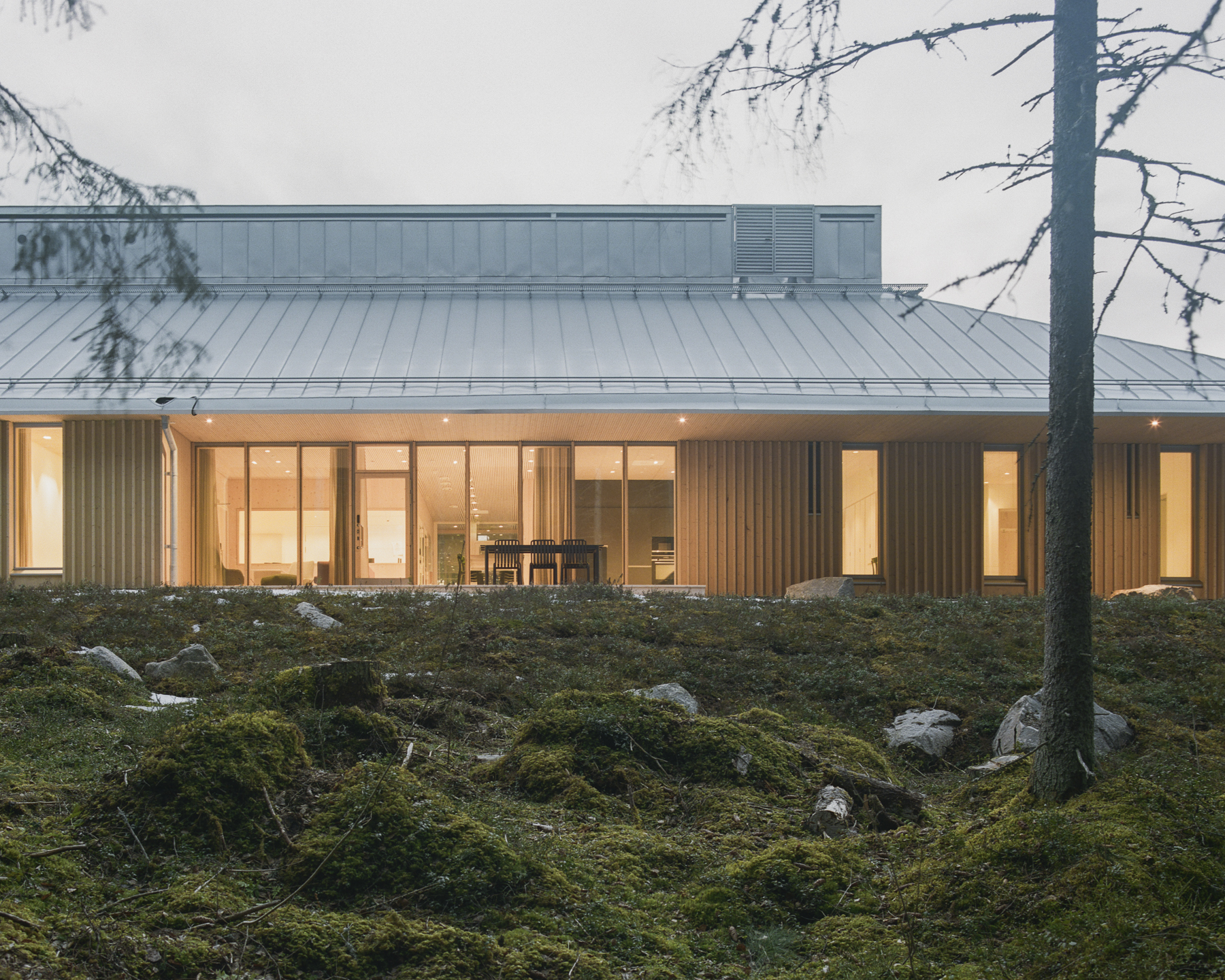
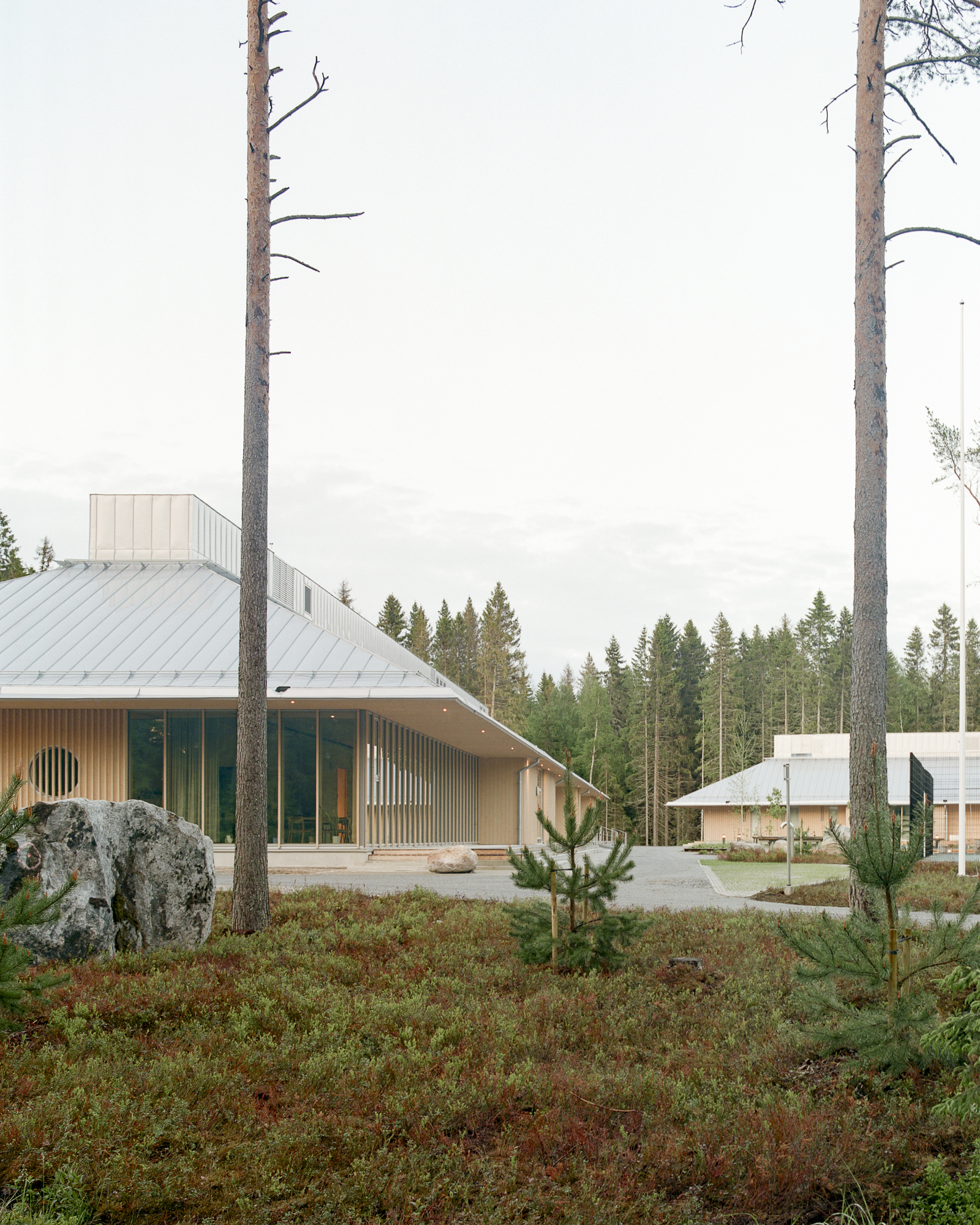
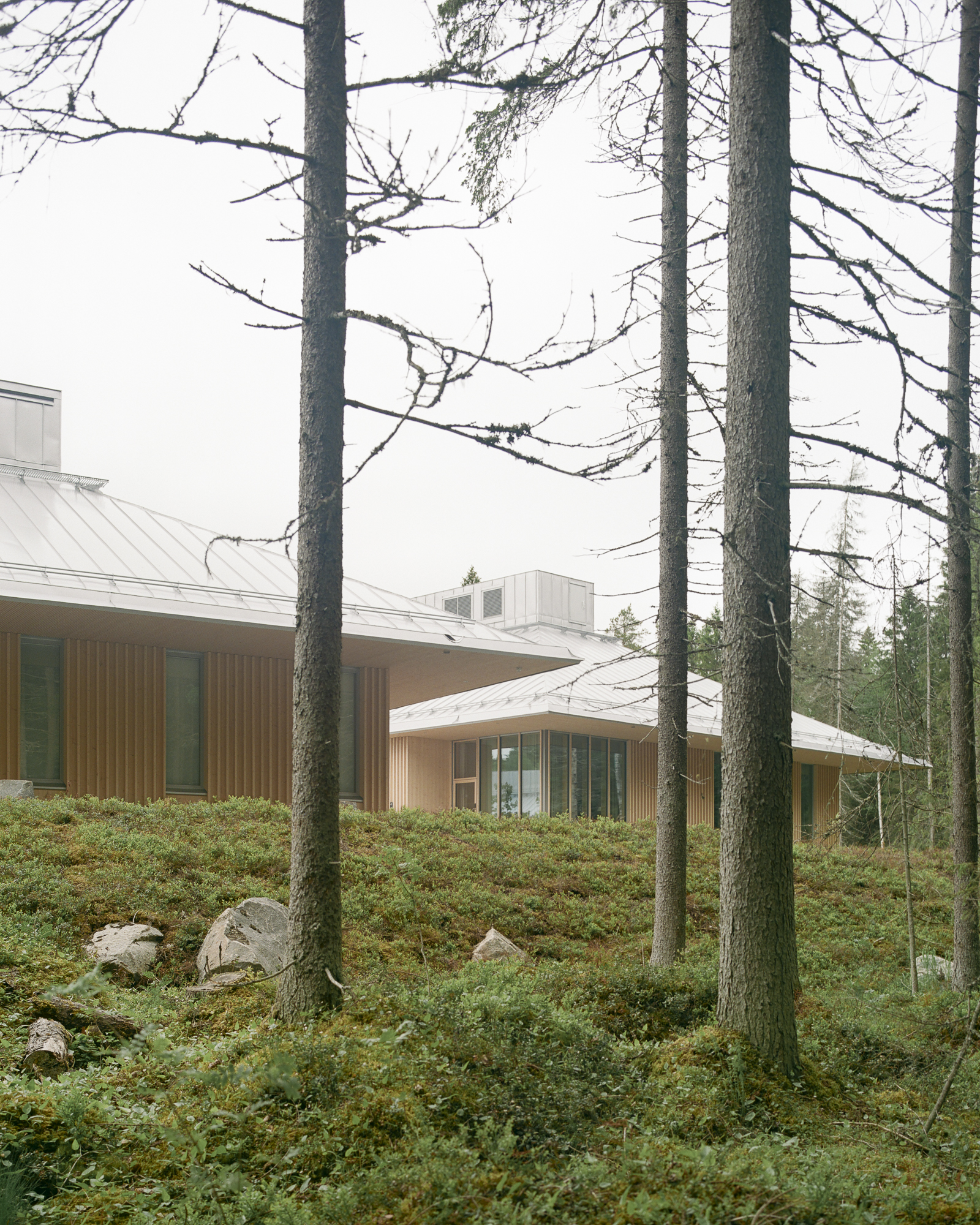
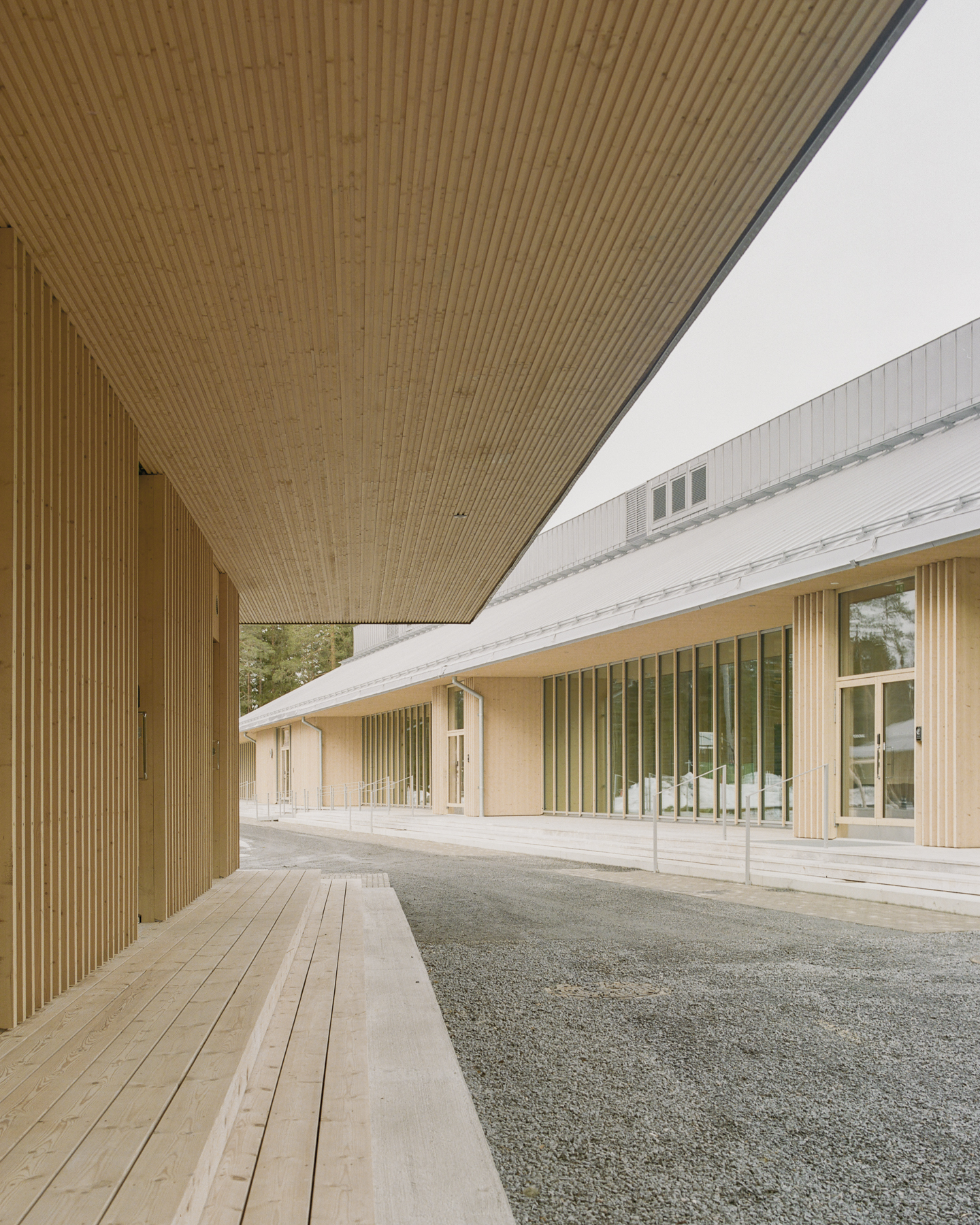
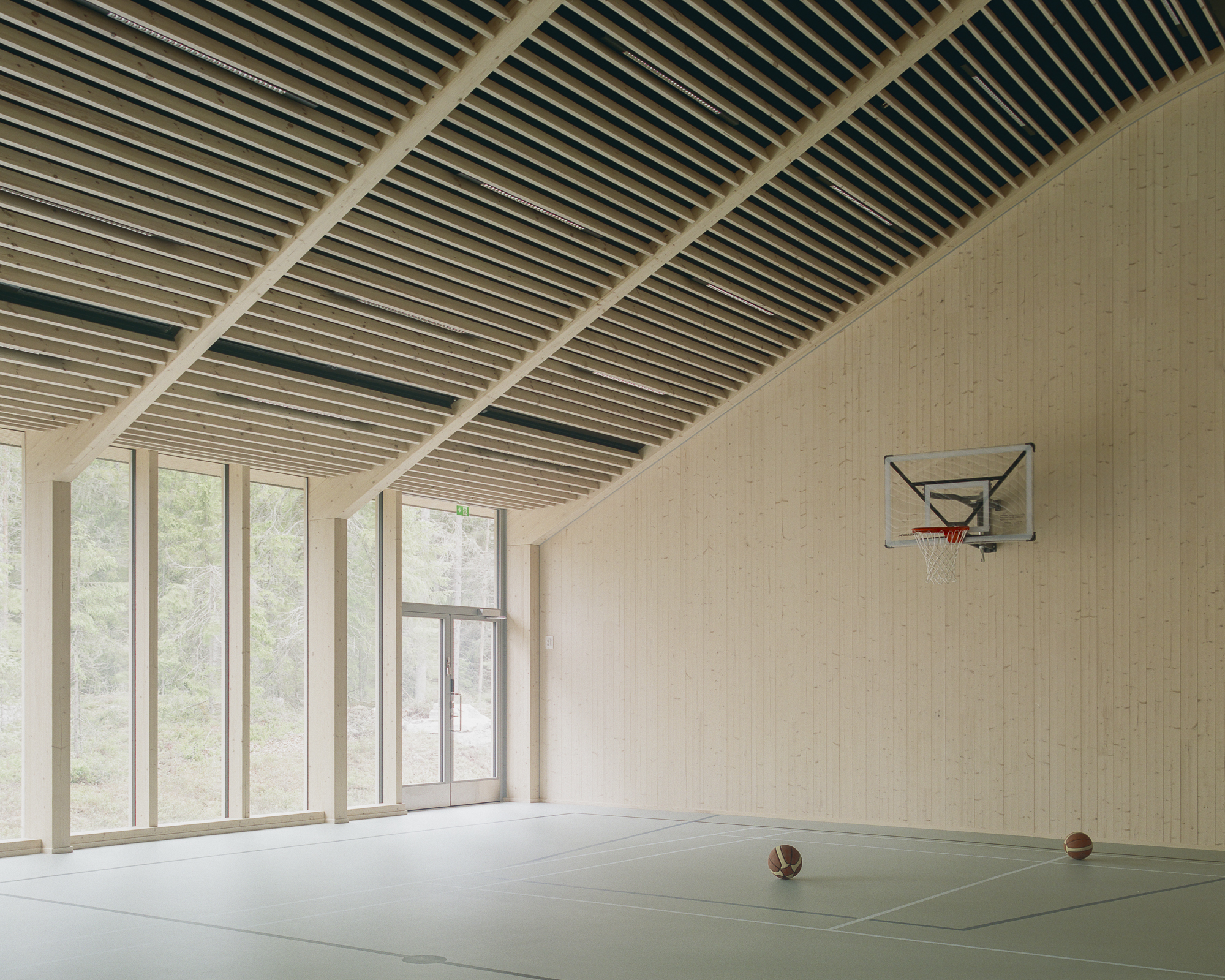
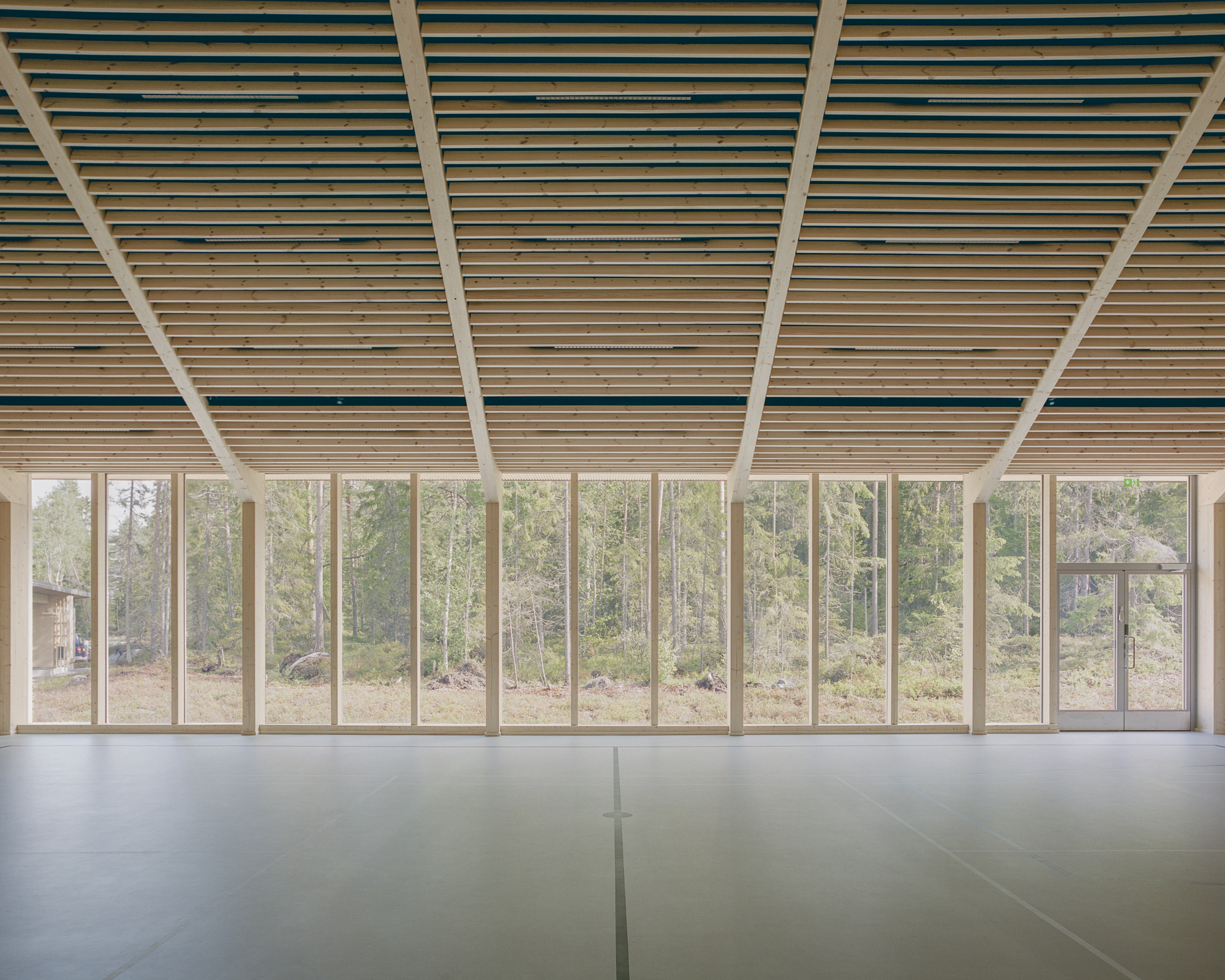
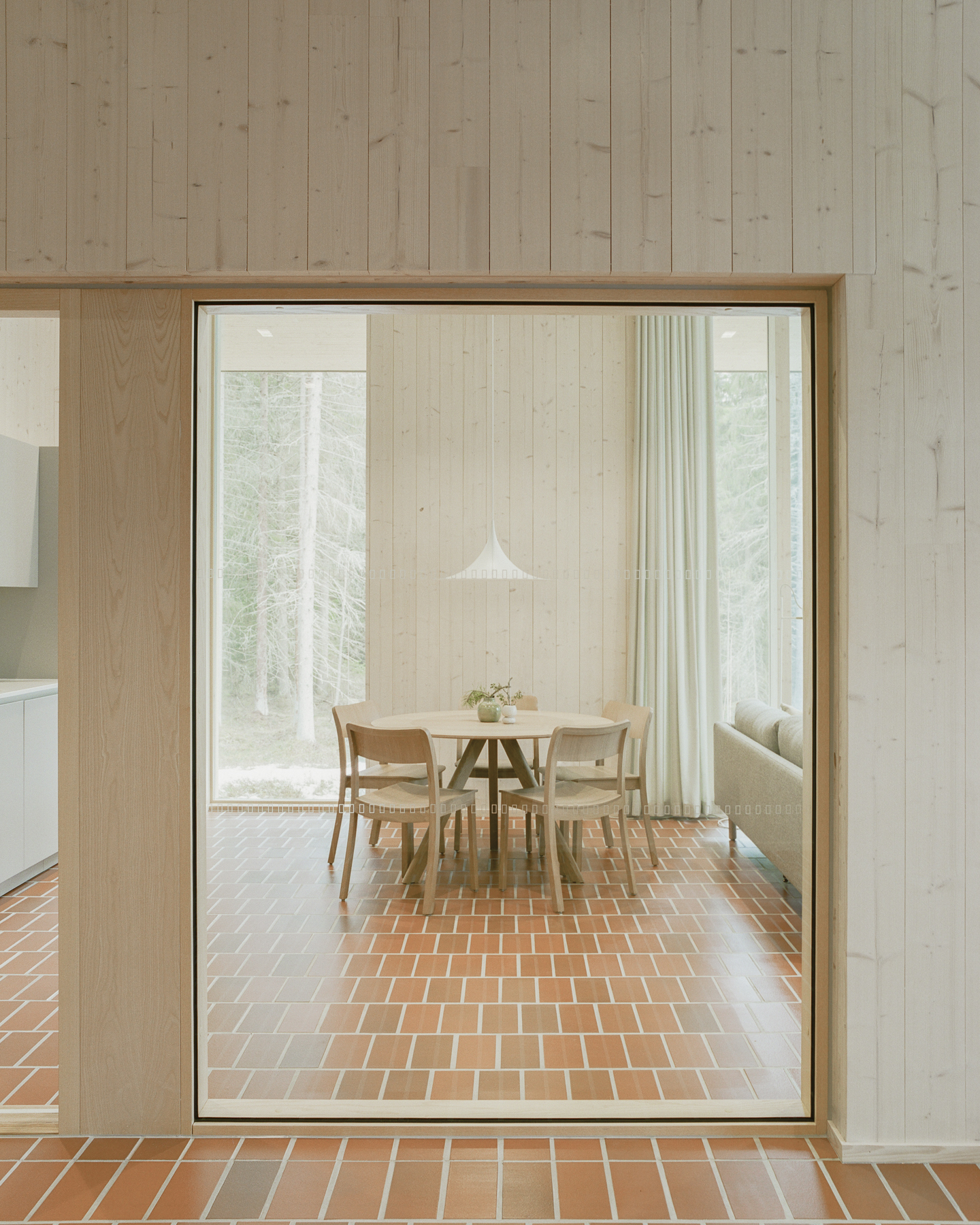
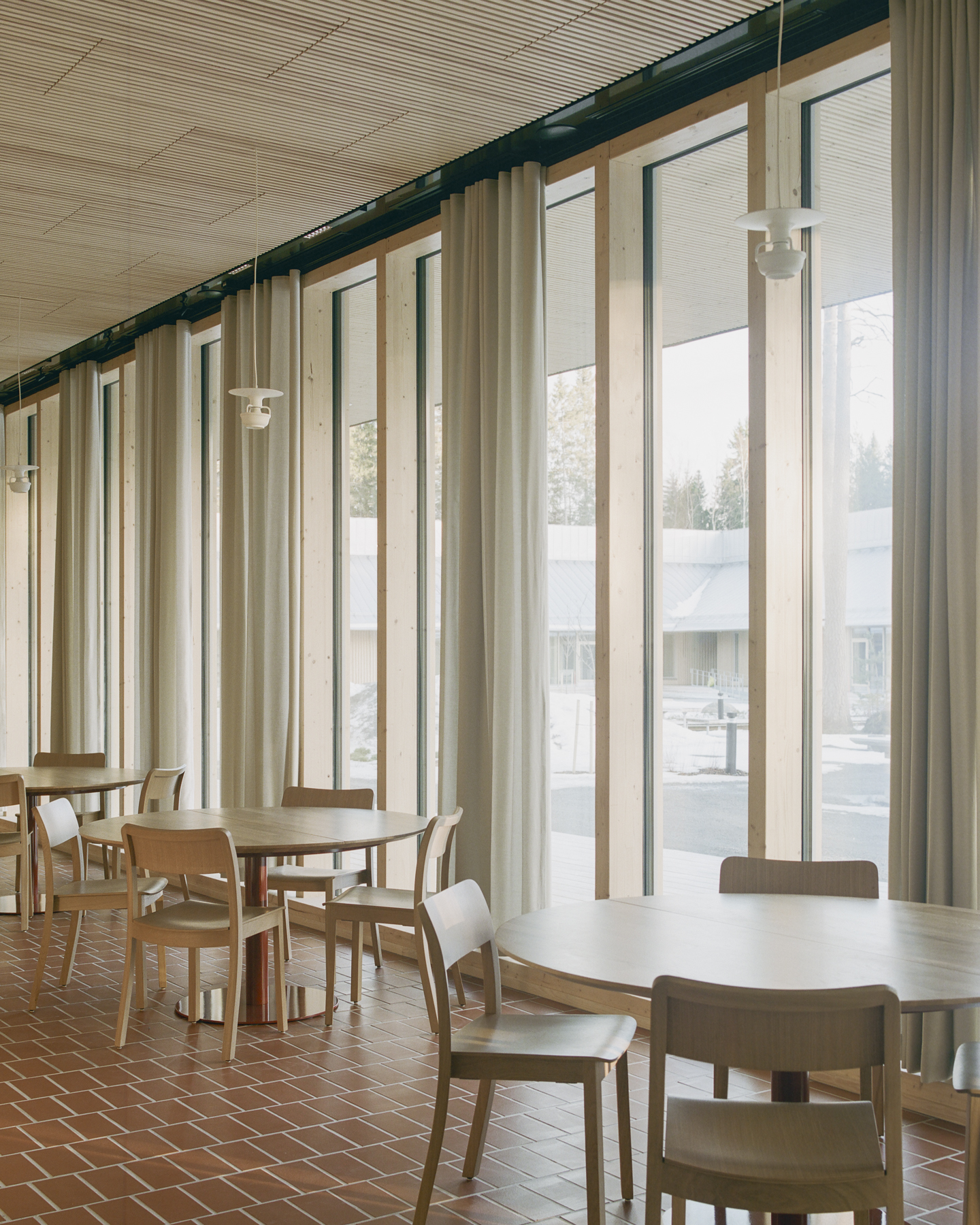
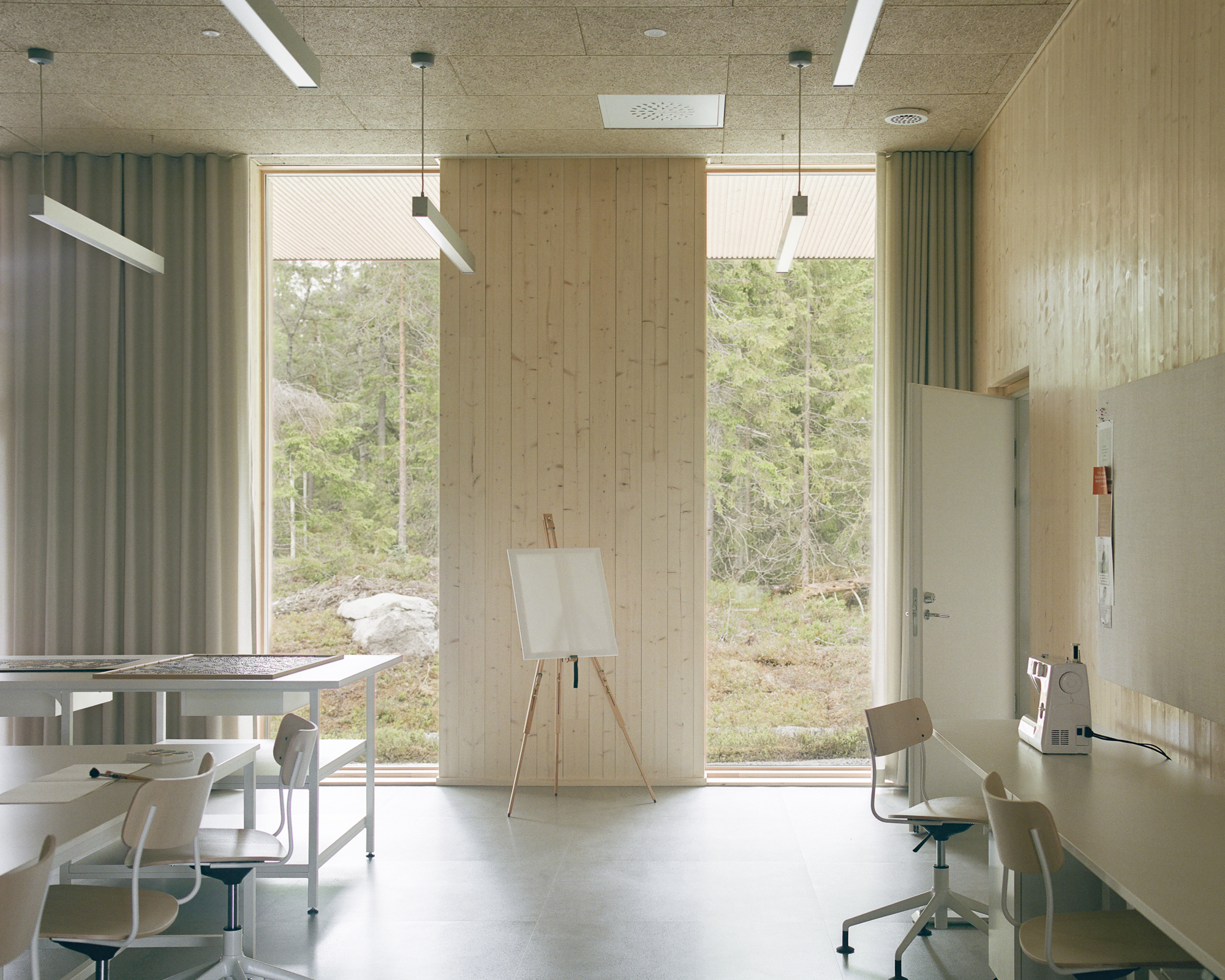
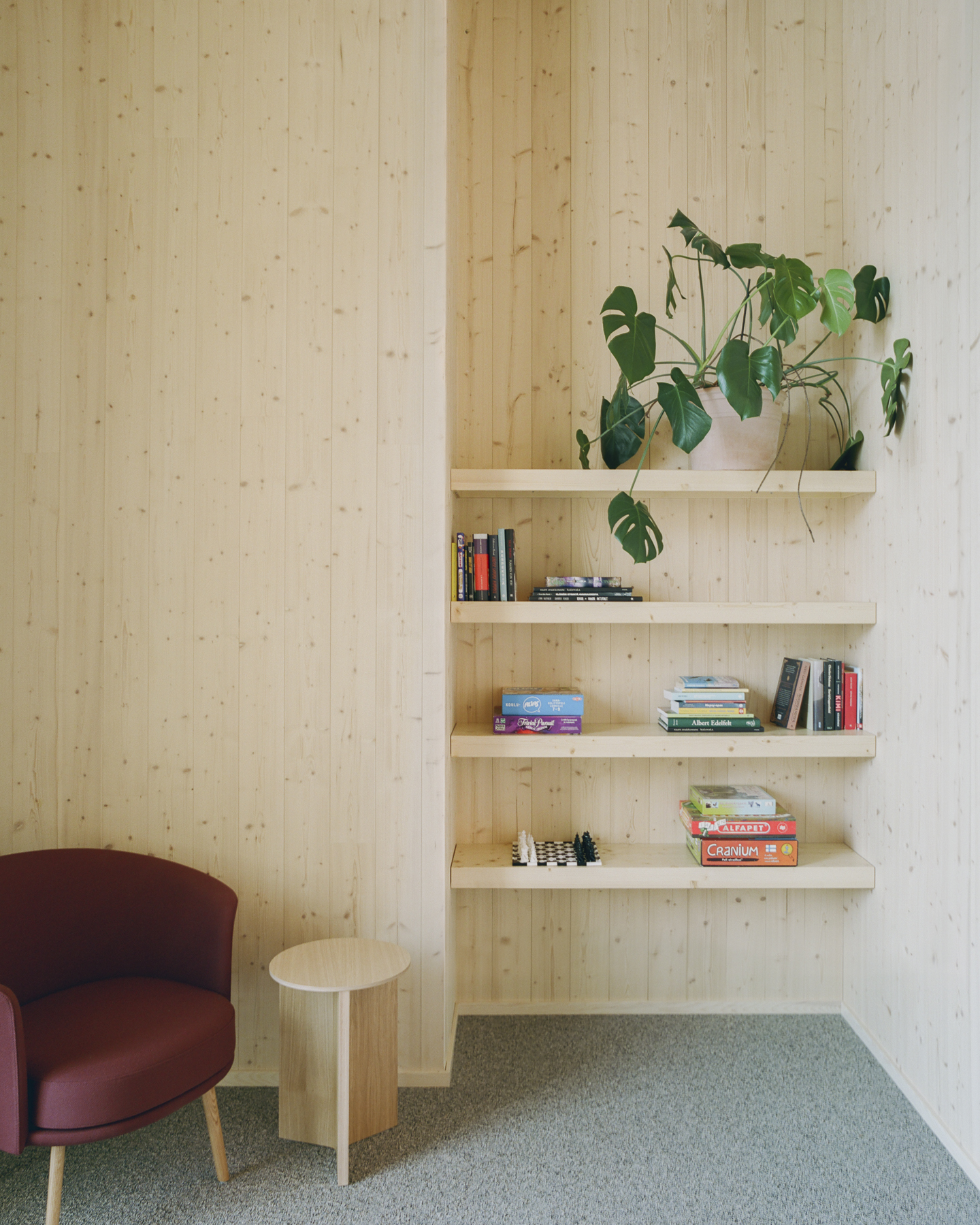
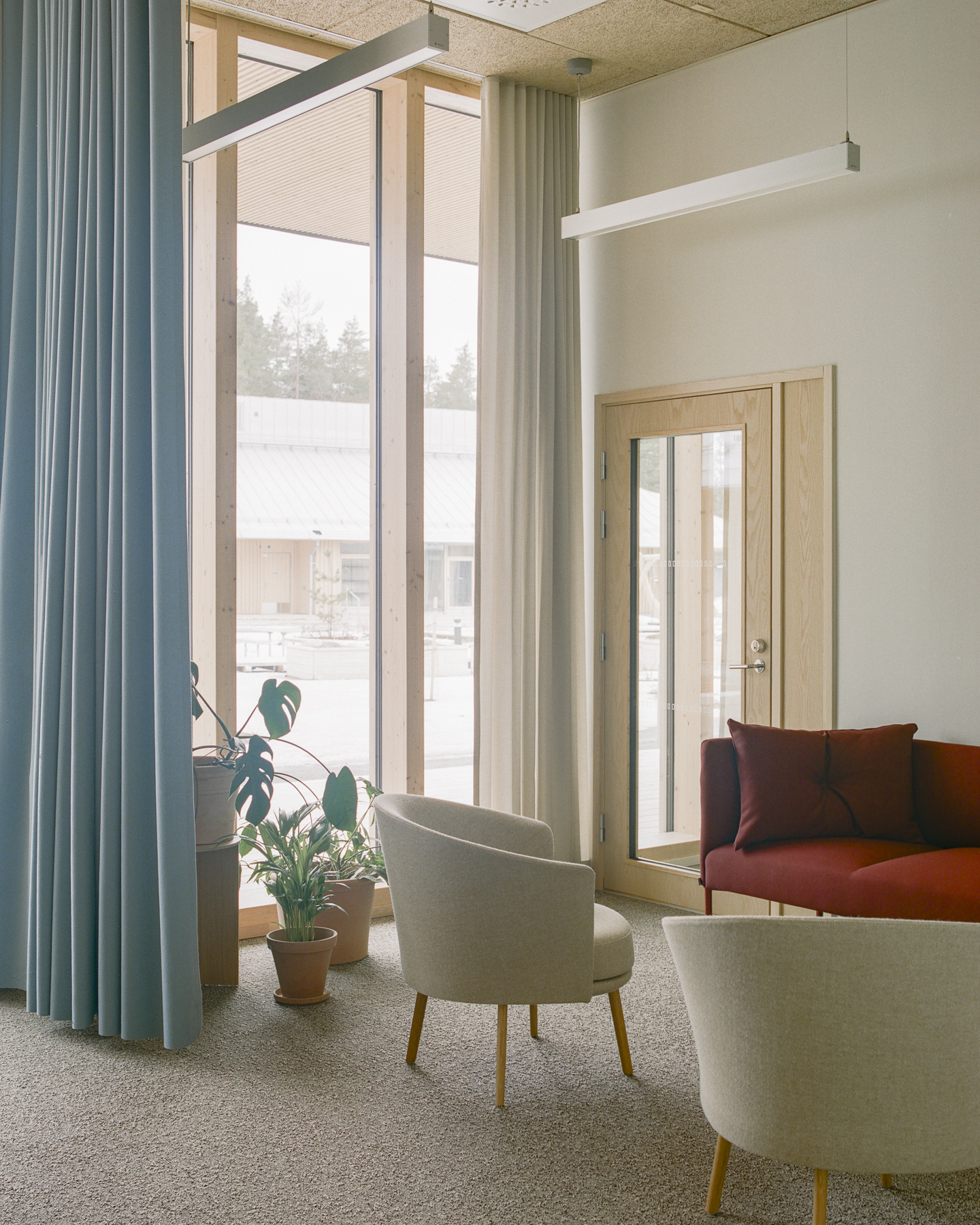
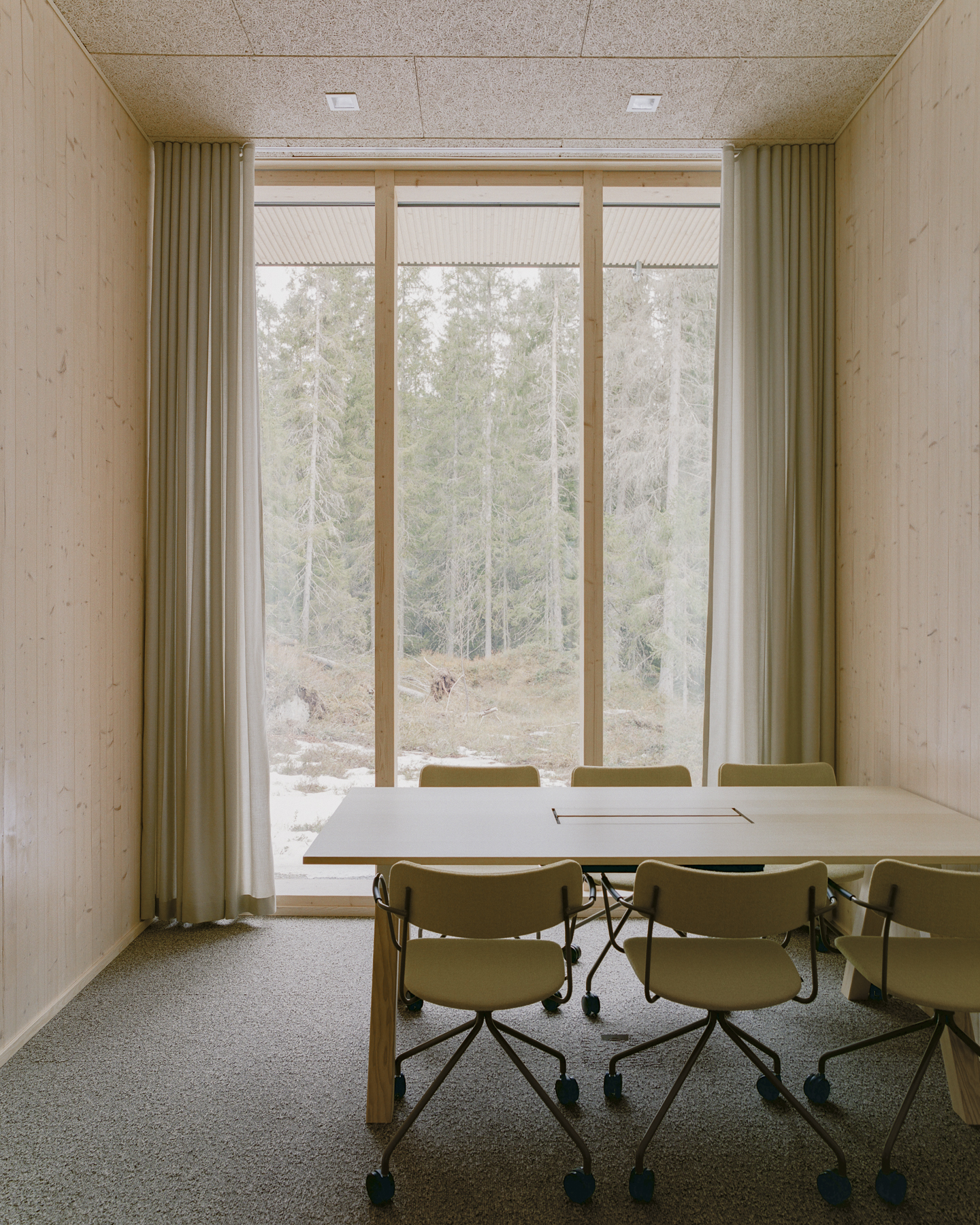
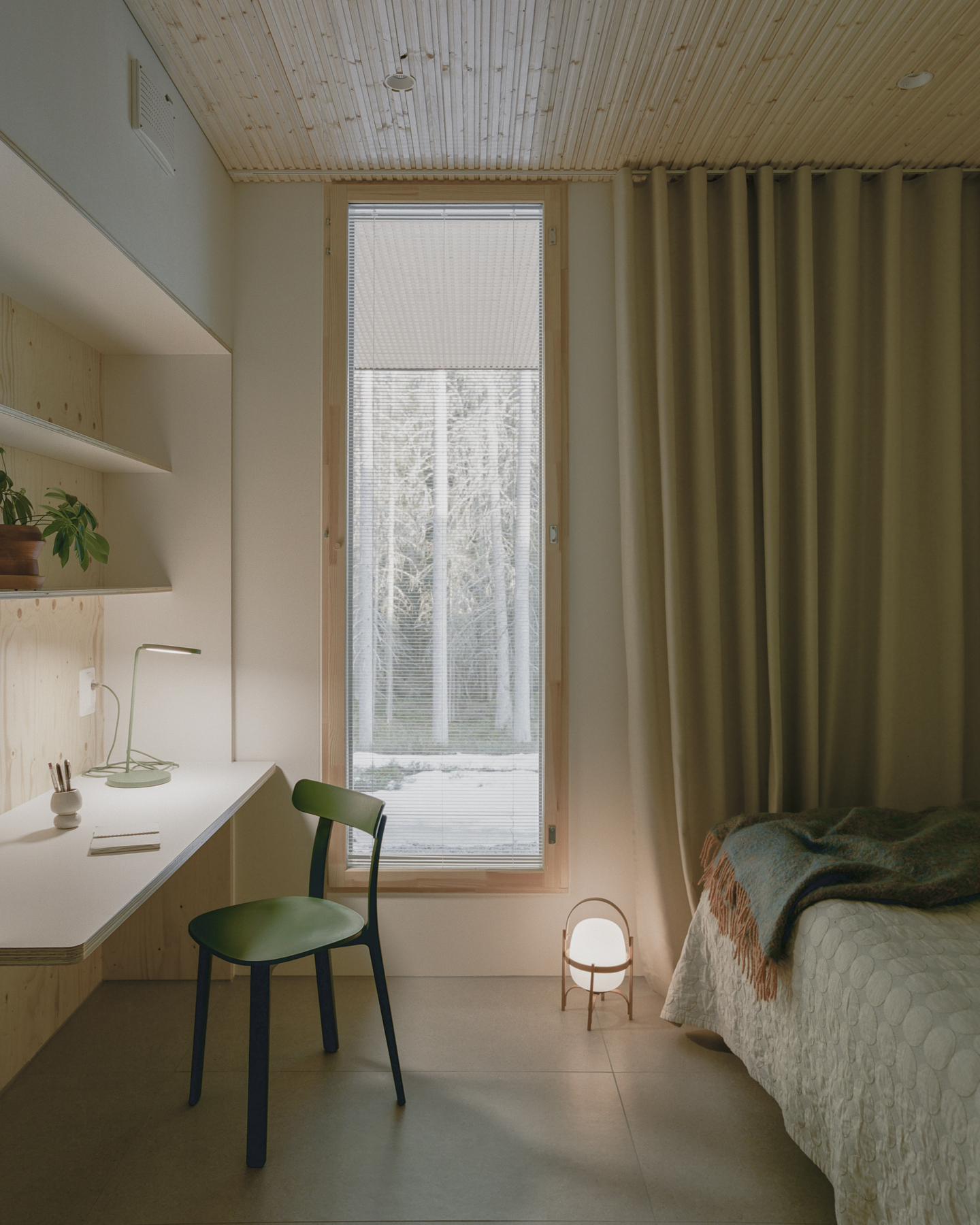
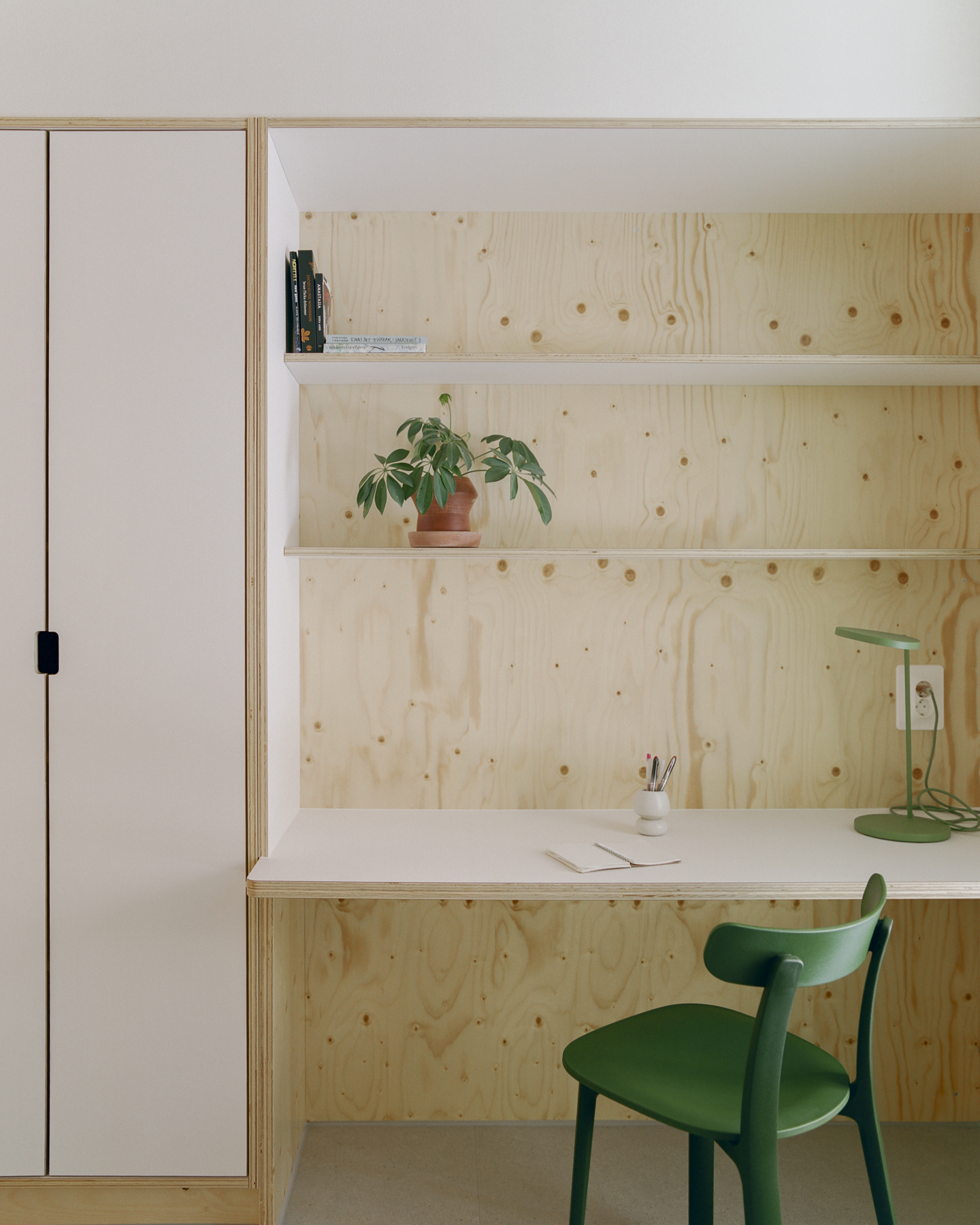
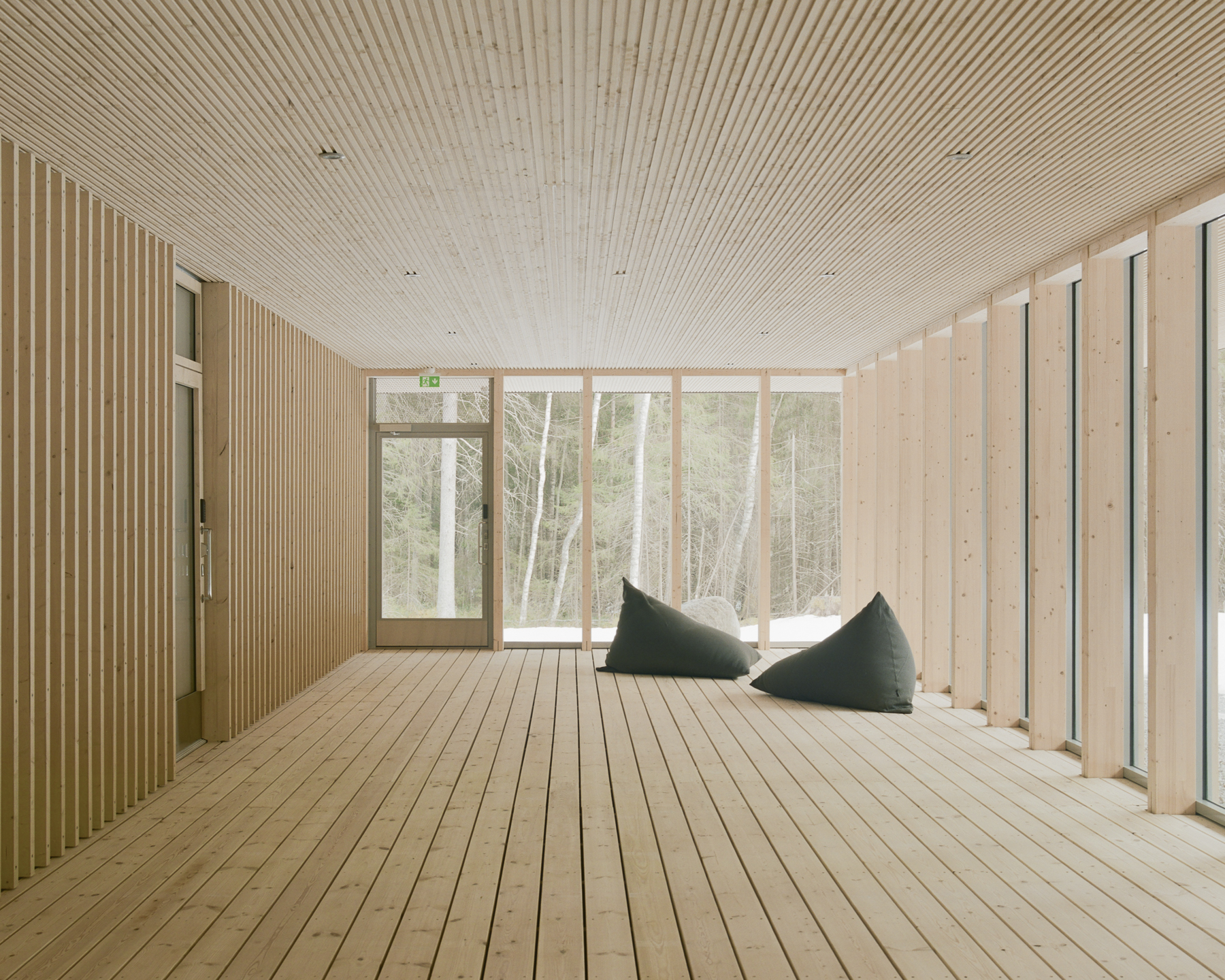
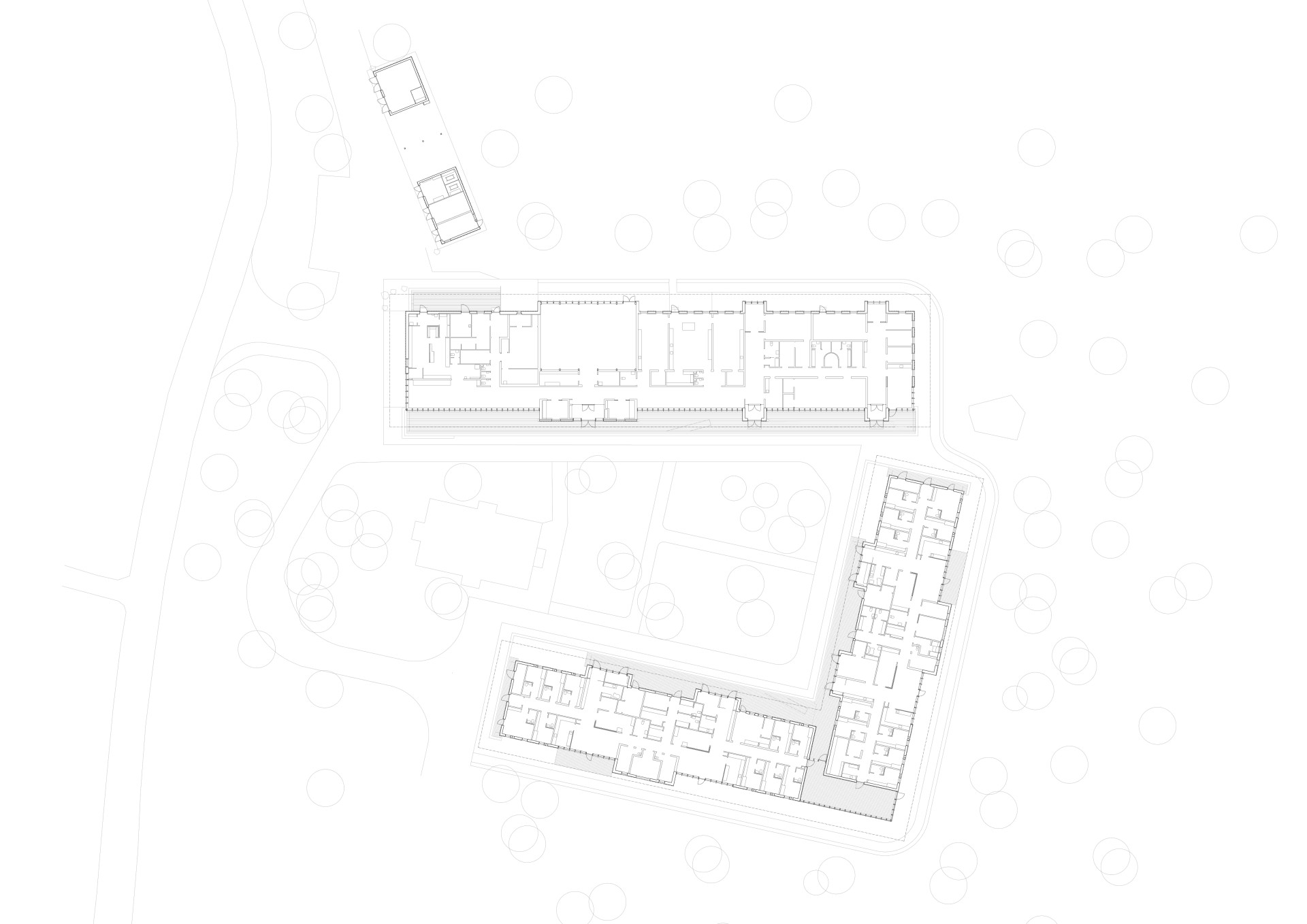
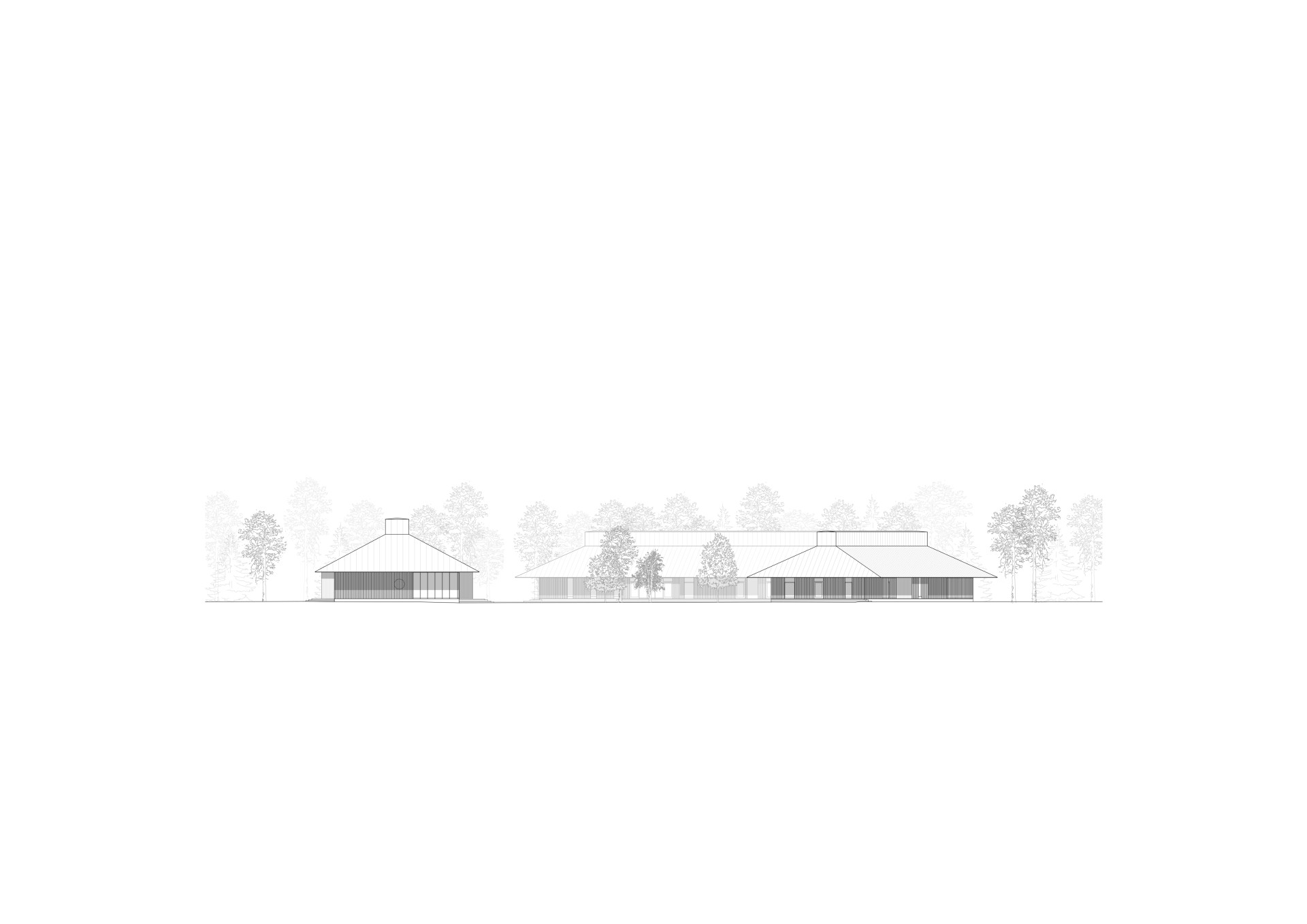
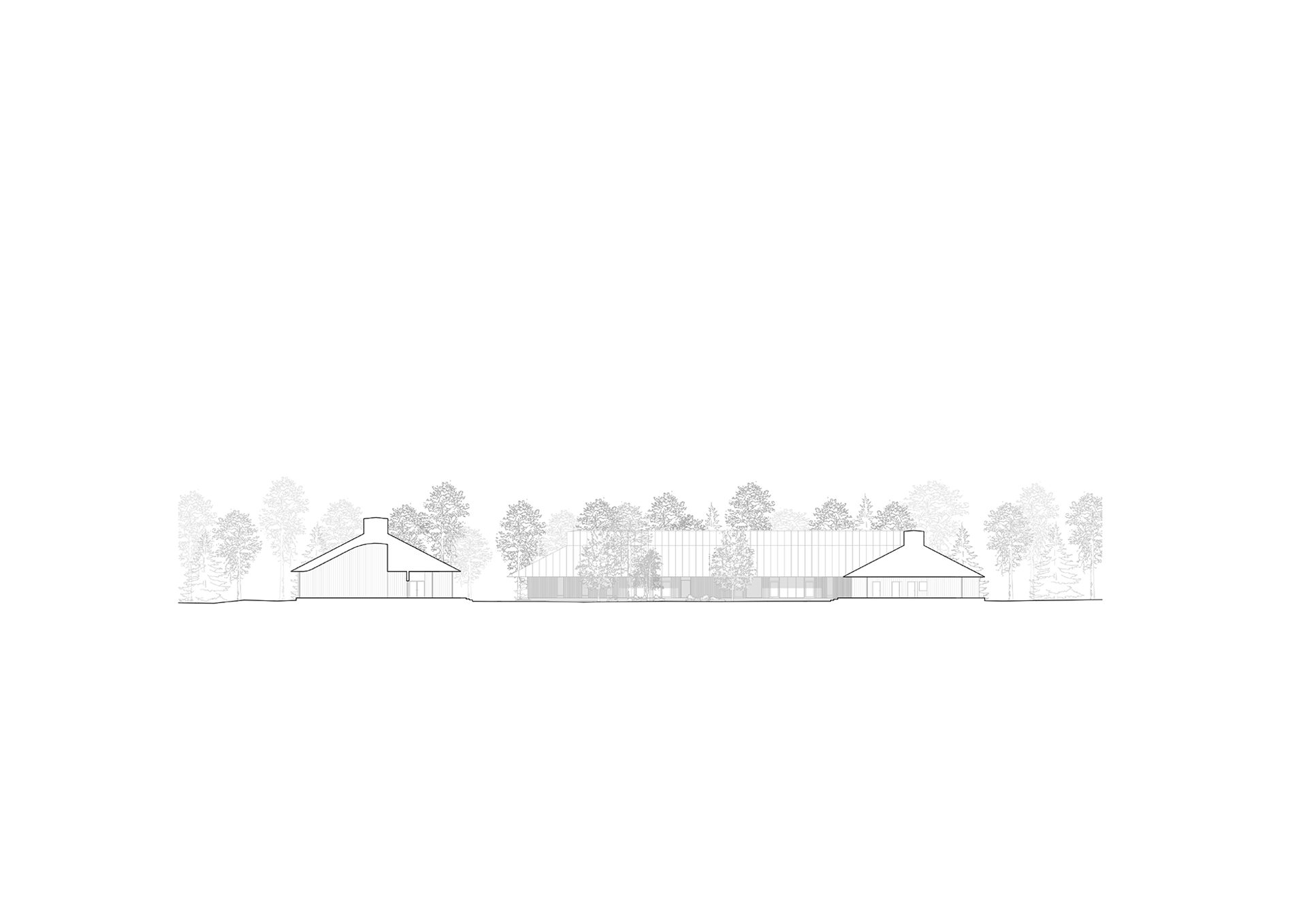
The complex includes school and residential buildings with 20 accommodation rooms across four units, alongside classrooms, recreational areas, a kitchen with a dining hall, and administrative spaces.
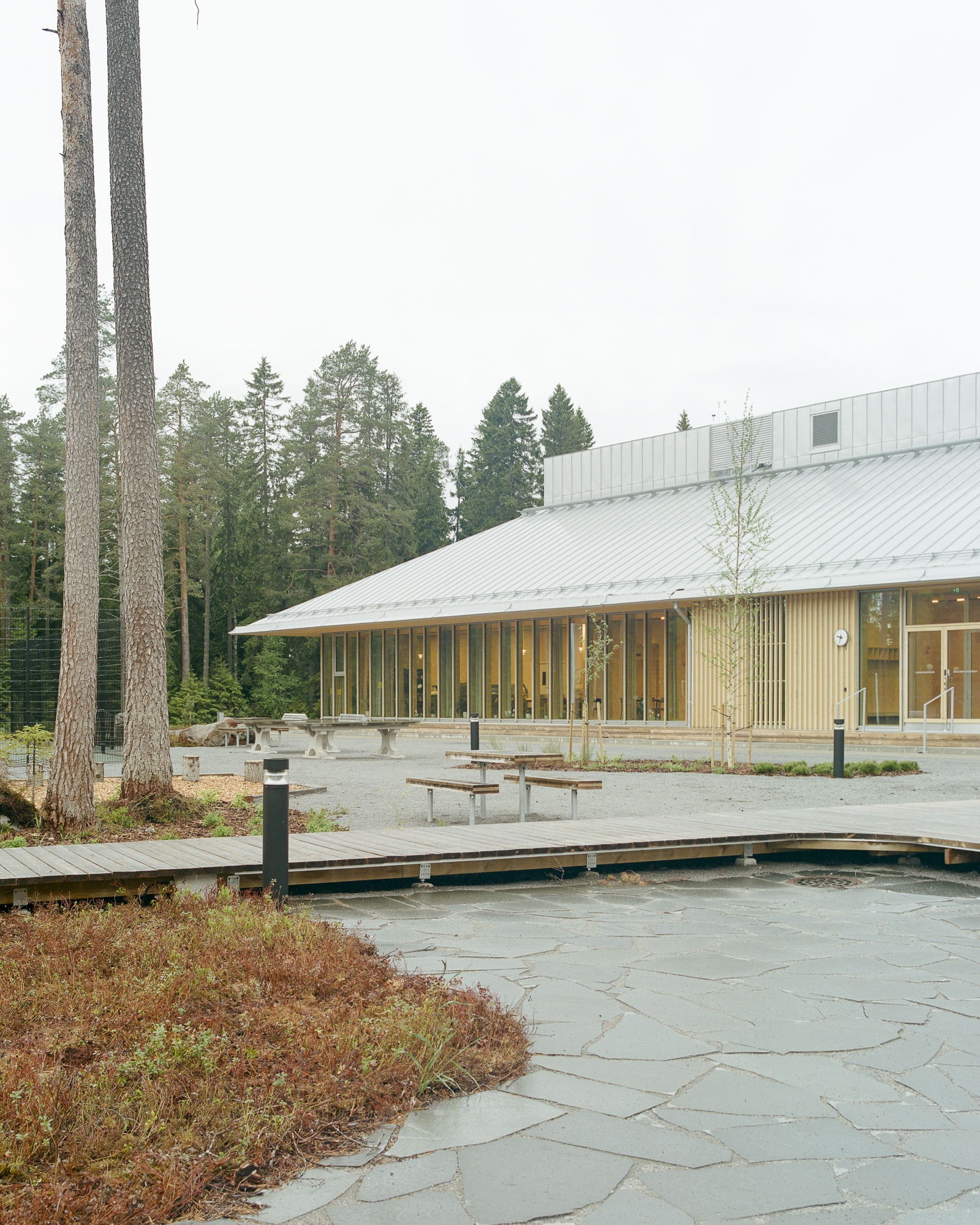
Designed around a central courtyard that opens toward the shoreline, the layout respects a century-old pine forest and encourages outdoor activity. The buildings’ single-story structure and wooden material palette create a calm and therapeutic living and learning environment to support recovery, growth, and community.
Architectural inspiration was drawn from Finnish Ostrobothnian building traditions, emphasizing simplicity, extended eaves, and integration with nature. The buildings’ frames, facades, and interior surfaces are primarily made of wood. The main structural element is massive CLT (cross-laminated timber), which was left exposed wherever possible. In the residential buildings, frame structures were also used. The facade cladding is a modern interpretation of traditional batten cladding. A light-colored standing seam metal roof conceals the building’s technical systems.
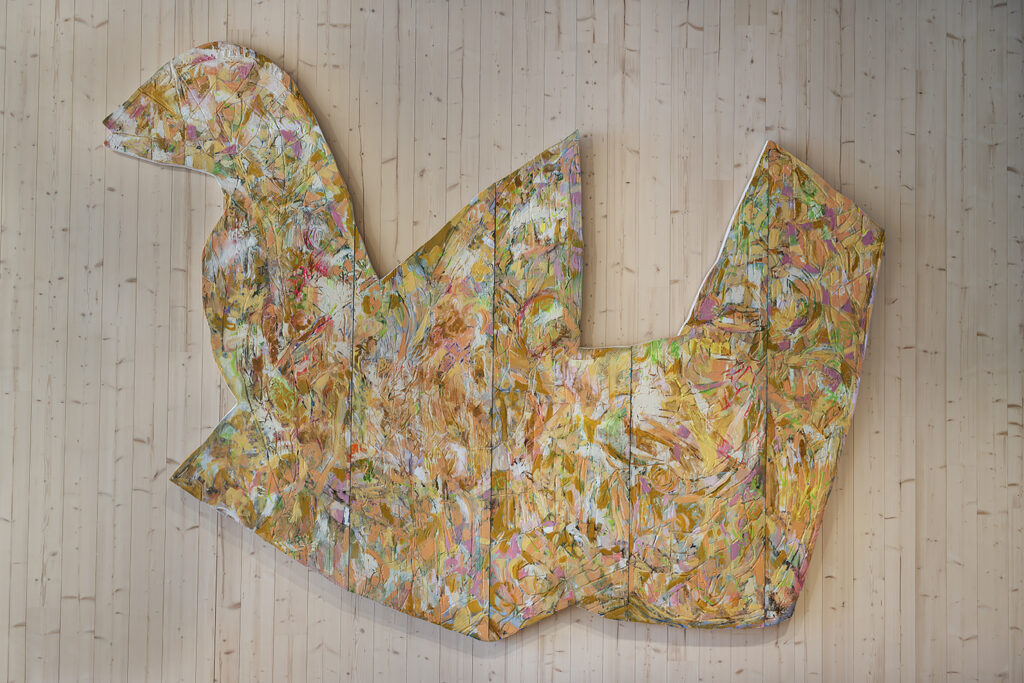
Functionality and adaptability guided the interior design. Surfaces combine CLT and plywood for a warm yet informal look, and furniture was selected for flexibility and durability. Interior colors reflect the surrounding forest, and both staff and students contributed to design choices. Students also helped build furniture, including coffee tables for the residential lounges.
Daily life is organized around a courtyard that encourages movement and outdoor activity. The school building occupies the northern edge, with shared spaces—dining hall, library, small group rooms, and lounges—opening through expansive timber-framed glass walls to the sunny yard. Classrooms orient toward tranquil forest views, while administrative spaces adjacent to teaching areas maintain visual connection to the courtyard.
Residential units line the southern and eastern sides in two buildings. At the heart of each unit, a living and dining space opens to the surrounding woodland, reinforcing the connection to nature.
The school supports research and development efforts by the Finnish Institute for Health and Welfare (THL), contributing to the continuous improvement of residential care models. The spatial concept was developed through earlier pilot projects and further refined through this project’s insights.
Low carbon emissions and energy efficiency were prioritized throughout the project. The compact building form, geothermal heating, solar power, use of wood, and low construction-phase emissions contributed to Senate Properties’ most climate-friendly project to date.
Alongside environmental responsibility, the project emphasized local expertise. A distributed contract model enabled medium-sized regional contractors to participate, and construction was carried out by local operators and subcontractors. The total cost of the project was approximately €13.5 million.
Technical solutions
The project was designed to meet fire class P3, allowing greater freedom in the choice of surface materials. The residential building is equipped with a vandal-resistant sprinkler system.
Given the diversity of spaces and their functions, particular attention was paid to airborne sound insulation between rooms. In collaboration with an acoustic designer, discreet locations for CLT walls were identified and fitted with sound breaks. For the most demanding spaces, special solutions such as dB-rated suspended ceilings were implemented.
School Building: The load-bearing structure consists of CLT elements and glulam columns, with glulam beams spanning the sports hall. Elsewhere, roof trusses are nail plate trusses. The intermediate floor of the ventilation plant room is a cast-in-place composite slab.
Residential Building: The load-bearing frame combines timber stud walls and glulam columns, with bracing provided by CLT panels and concrete block walls. Roof trusses are nail plate trusses.
Roof structures are stiffened with timber diagonal braces or factory-made rigid trusses. The roof deck is reinforced as a planar diaphragm. High trusses feature a two-part structure: overlapping trusses with a stiffening plywood layer in between.
Timber-framed glass walls also serve as load-bearing elements, creating a calm architectural expression while reducing construction phases.
Material use was optimized by repurposing surplus CLT offcuts into outdoor furniture and benches for entrance areas. Beyond its aesthetic qualities, timber withstands heavy use: minor dents in solid structures do not detract from the design but rather reflect lived experience.
The buildings are equipped with geothermal heating and primarily underfloor heating. Energy wells are also used for supply air cooling during summer. A solar power system complements the energy concept.
Lifecycle Carbon Footprint
Residential Building: 13.05 kg CO₂e/m²/year
(Reference limit: 25.0 kg CO₂e/m²/year for 2026–2027, and 24.0 kg CO₂e/m²/year from 2028 onward)
Project timeline
- Architectural Design Competition: January–April 2020
- Design Phase Start: March 2022
- Construction Start: June 2023
- Weather Protection: October 2023
- Timber Frame and CLT Installation: October–November 2023
- Facade Timber Work and Glazing: January–March 2024
- Courtyard Construction: July–October 2024
- Completion: January 2025
The user was closely involved in the design process following the competition phase. The design was based on a spatial concept developed by the State Reform Schools, incorporating functional and aesthetic goals informed by previous projects. Experiences from Lagmansgården continue to guide the evolution of this concept.
Construction faced challenges during an early, snowy winter, but building under a protective tent until the roof was completed significantly eased the situation. A distributed contract model not only kept costs within budget but also enabled medium-sized local contractors to participate. Ultimately, the works were carried out by local operators and subcontractors.
The demanding and varied use of spaces made procurement complex: interior doors alone were sourced from four different manufacturers, and many areas required bespoke solutions where no ready-made products existed.
CREDITS
Anttinen Oiva Architects
- Lead Architects: Selina Anttinen, Vesa Oiva
- Principal Designer: Tapani Lehtinen
- Project Architect: Annamari Vesamo
- Interior Architect: Teija Tarvo
- Competition Phase: Jaakko Viertiö, Tomi Itäniemi
Faktat kohteesta
Lagmansgården Reform School
- Sijainti | Pietarsaari
- Käyttötarkoitus | Reform School
- Rakennuttaja/Tilaaja | Senate Properties, State Reform Schools, Finnish Institute for Health and Welfare
- Valmistumisvuosi | 2025
- Kerrosala | 2 568 m2
- Kokonaisala | 3 053 m2
- Tilavuus | 12 700 m3
- Investointikustannukset | 13 500 000€
- Arkkitehtisuunnittelu | Anttinen Oiva Architects
- Rakennesuunnittelu | Sitowise Oy
- Akustiikkasuunnittelu | Afry Finland Oy
- Palotekninen suunnittelu | LK-Paloinsinöörit Oy
- LVIA-suunnittelu | Sitowise Oy
- Sprinklerisuunnittelu | Lakeuden Sprinkleri Oy
- Sähkösuunnittelu | Sitowise Oy
- Sisustussuunnittelu | Anttinen Oiva Arkkitehdit Oy
- Muut suunnittelijat ja asiantuntijat | Landscape Architecture: Nomaji maisema-arkkitehdit Oy
Wood Construction Specialist: Alterplan Oy - Pääurakoitsija | Jake Rakennus Bygg Oy
- Puuosien toimittaja | CLT elements: Crosslam Oy
- Muut materiaalit | Facade: KH Wood Oy
Roof trusses and pre-cut: SHR Product Oy
Glulam beams: Arcwood Oy - Valokuvat | Kalle Kouhia
- Teksti | Anttinen Oiva Arkkitehdit Oy